The zero price effect: why "free" is so persuasive and what to check first
By Today Offers Journal · Sep 20, 2026 · 5 min read
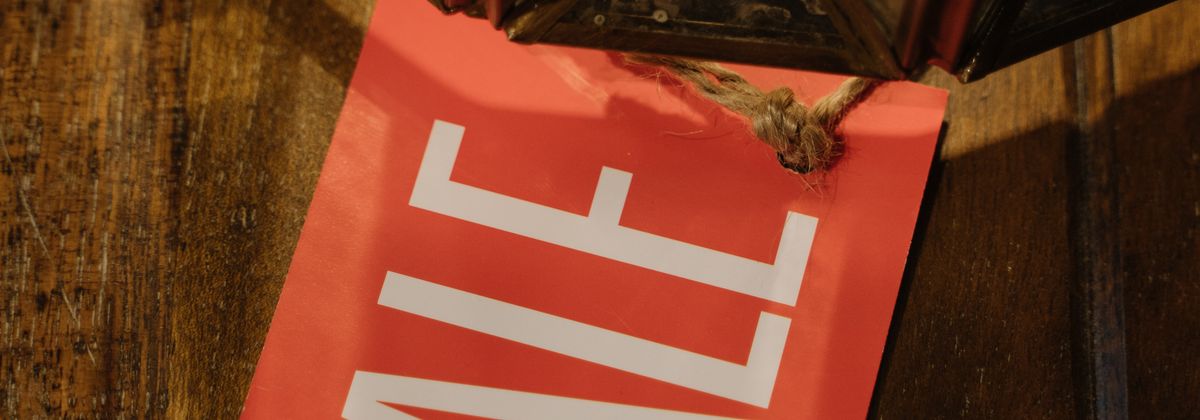
The word free can make a poor deal look excellent. Learn why zero feels special, where the cost hides, and a short test for deciding whether free is actually worth it.
A price of $1 and a price of $0 look nearly identical on paper, yet they feel very different. "Free" removes the sense of risk. You cannot lose money on something that costs nothing, so the usual brakes come off. That reaction is useful when something really is free, such as a library book or a free community event. It is less useful when "free" is part of a package where the cost is hidden in another place.
This guide looks at how the word works, the usual places the cost appears, and a four-question test to apply.
Why zero feels different
Most prices come with a mental calculation: is this worth the money? Zero skips the calculation. The decision shifts from "is it worth it?" to "why not?". People take free samples they would not buy, join free programs they never use and add free items to their baskets that then need storing, maintaining or discarding.
The brain also treats free as a pure gain, with no downside. But even a free item can have a cost in time, space, data or future spending.
Where the cost usually hides
In another price
A "free gift with purchase" may be paid for by a higher base price, a minimum spend or a smaller discount than you could get elsewhere. Our guide to gift-with-purchase offers lists the conditions that decide whether the gift is free.
In what you must do
- Spend a minimum. "Free shipping over $50" may push you to add items.
- Join something. A free item may require a membership, an app account or a subscription.
- Share information. Free often means "free in exchange for your email, phone number or shopping data".
- Visit or attend. A free night's stay may require a sales presentation.
In what happens later
A free trial may become a paid plan after the period ends, often at a price that rises after an introductory period. A free device may be tied to a contract. A free sample may lead you to a product that costs more than what you were already using.
In ongoing use
A free printer needing expensive ink, a free razor handle with costly blades or a free kettle needing a special filter cartridge all show how the first purchase is not the whole purchase. See our article on cheap devices and costly refills for a worked comparison.
A four-question test for "free"
Ask these before accepting.
- What must I do or buy to get it? List the minimum spend, the sign-up and the data you give.
- What does it cost me later? Check for renewals, refills, add-ons and the price after any trial.
- Would I pay a small price for this, say a few dollars? If the answer is no, it is not valuable to you, and taking it for free is just clutter.
- What is the cheapest way to get what I actually want? The free item may not be on the cheapest route.
If the answers are "nothing", "nothing", "yes" and "this is it", then take the free item with a clear conscience.
In the example, the gift cost about as much as it is worth. If you did not want those extra items, the exchange is close to neutral at best, and negative if the items go unused.
Free shipping
Free shipping is the most common free offer, and it deserves a closer look. It is often tied to a minimum order or a membership. A free shipping threshold can be a bargain if you were going to spend that amount anyway, but a trap if you add items to reach it. Compare the shipping fee with the cost of the extra item you would add. Our article on free shipping thresholds has a worked check.
Also look at delivery times. Free delivery that takes two weeks may not be free if you need the item sooner and end up buying locally.
Free trials and free tiers
A free trial costs nothing if you cancel in time and nothing else is required. Practical steps:
- Note the trial end date as soon as you start.
- Write down the price after the trial.
- Check how to cancel before you sign up.
- Set a reminder two days before the end.
A free tier of an app or service may be genuinely useful, but it often has limits designed to nudge you to the paid plan. That is not wrong, but it is worth deciding in advance what you would pay for and what you would not.
Free samples and free events
Samples are useful when they help you decide whether to buy something. They can also create a feeling of owing the seller a purchase. You do not owe one. Enjoy the sample, and decide as if it never happened.
Free events, such as a tasting or a promotional day, can be good fun and a way to look at local offers. A budget for the day, set in advance, keeps them that way. You can browse local offers to find events and check their terms.
When free is simply free
Some free items are truly free: a returned bag, a community swap, a library membership or a borrowed tool. Our article on buy nothing and swap groups covers these. If it costs nothing in money, time or strings, and you have a use for it, the usual rules do not need to apply. Just think about storage and whether you will use it.
A short habit
When you see "free", count the strings out loud: "What do I have to buy, sign or share?" Writing the answer in one line often shows that the real price is not zero, and it is much easier to decide with a figure in front of you.
Frequently asked questions
Is a free gift ever a good reason to buy something?
Yes, if you would buy the main item anyway at a fair price and the gift is something you will use. Otherwise the gift is a reason to spend more, not a saving.
How do I know whether a free trial will charge me?
Read the terms before you enter payment details, note the end date and the price after the trial, and check how to cancel. If cancelling looks hard, consider skipping it.
Are free apps and services really free?
Some are, and some are paid for by advertising or by the data you provide. Read the privacy settings and decide whether the exchange suits you.
Ready to put this to use? Browse today's offers Share a deal you found
 How to tell a real discount from a fake one
 How to evaluate buy-one-get-one, bundles and multi-buy offers
 Ten phrases in offer terms translated: subject to availability, at participating stores and more