How to compare unit prices when pack sizes and units differ
By Today Offers Journal · Sep 10, 2026 · 5 min read
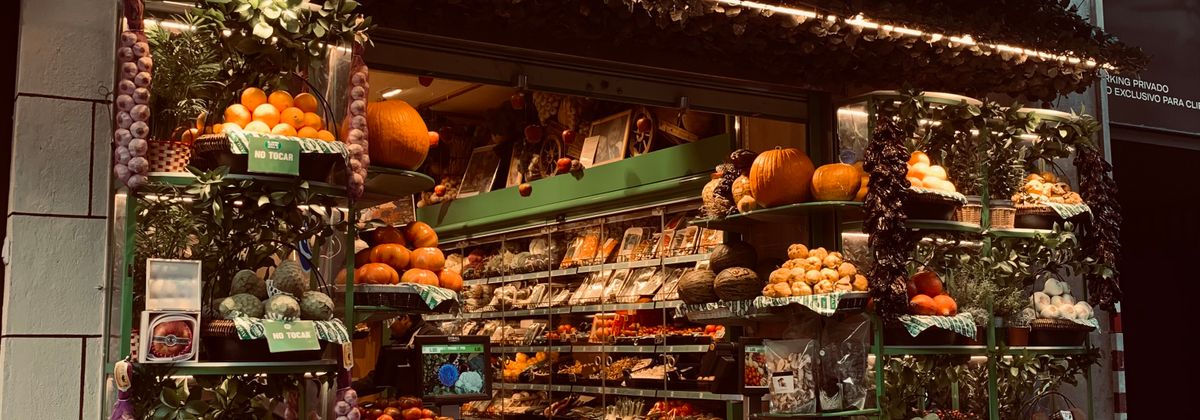
Shelf labels, packs and units rarely line up. This guide shows how to turn any grocery price into a fair comparison, with worked examples you can repeat in your head or on a phone.
Two products can look similar on the shelf and still have very different costs. One is sold in grams, another in ounces, a third by the item. One pack is large, another is small, and a third has a bright "sale" flag. The shelf is not set up to make comparisons easy, so you have to do a little of the work yourself. The good news is that it takes only one idea: bring everything to the same unit.
What a unit price is
A unit price is the cost of a standard amount of a product, such as the price per 100 grams, per kilogram, per litre or per 100 sheets. Many stores print it on the shelf tag in small type, near the main price. In some places this is a legal requirement and in others it is voluntary, so the exact format varies by country, province or state.
Use the unit price to compare similar items. It does not tell you which product is better, only which gives more for the money.
Worked example one: different pack sizes
Suppose you are buying rice. The prices below are examples only.
- Pack A: 500 g for $2.20
- Pack B: 2 kg for $7.40
- Pack C: 900 g for $3.60
To compare, work out the price per 100 g.
- Pack A: $2.20 divided by 5 equals $0.44 per 100 g.
- Pack B: $7.40 divided by 20 equals $0.37 per 100 g.
- Pack C: $3.60 divided by 9 equals $0.40 per 100 g.
Pack B is the cheapest by weight. The saving is not huge, but it appears every time you buy. Whether it is the best choice depends on whether you will use 2 kg before it goes stale and whether you have space to store it.
Worked example two: different units
Sometimes units are not the same. A can of soup may be labelled in millilitres, a similar one in fluid ounces and a carton in litres. Before you compare, convert them.
A few conversions help, though you can always use a phone calculator:
- 1 kilogram equals 1,000 grams, and 1 litre equals 1,000 millilitres.
- 1 pound is about 454 grams.
- 1 ounce is about 28 grams.
- 1 US fluid ounce is about 30 millilitres.
Suppose one pasta sauce is 680 ml for $3.40, and another is 24 oz for $3.10. Convert 24 oz of weight to about 680 g. If both are really about the same amount, the second is cheaper. If one is labelled in volume and the other in weight, the comparison is only rough. Sauces are close enough to water in density that you can treat them as similar, but oil and honey are not.
Worked example three: price per item or per serving
Packs of multiples, such as yogurt cups or granola bars, are sometimes labelled per item and sometimes per weight. If the weight per item differs, the per-item price misleads you.
A pack of six bars at $4.80 is 80 cents each. A pack of eight at $5.60 is 70 cents each. But if the six-pack bars weigh 40 g and the eight-pack bars weigh 28 g, the per-gram price tells a different story:
- Six-pack: $4.80 divided by 240 g equals $2.00 per 100 g.
- Eight-pack: $5.60 divided by 224 g equals $2.50 per 100 g.
The six-pack is cheaper where it counts. If you instead care about cost per snack, and a smaller bar is what you want, the eight-pack suits you. Choose the measure that matches how you will use the food.
When the unit price lies
Unit prices are helpful, but a few situations can mislead you.
- Different quality. A cheaper unit price is not a bargain if the product is not what you want. A mix with filler is not the same as pure ingredients.
- Different concentration. Laundry detergent, juice and cleaning products come in concentrated and diluted forms. Compare per wash or per serving, not per litre.
- Water and weight. Items packed in liquid, such as canned fish or vegetables, may be labelled with drained weight or total weight. Check which one the label uses.
- Size changes. Manufacturers sometimes reduce the amount in a pack while keeping the price. Seeing a familiar package at a familiar price does not mean the contents are the same. Reading the net weight is the only way to know.
- Waste. A large pack of something perishable is poor value if half goes in the bin.
A quick method for the shelf
When no unit price is printed, or you want to be sure, use a fast calculation.
- Find the price and the net weight or volume.
- Convert to a common unit, such as grams or millilitres.
- Divide the price by the amount, and multiply to get a figure per 100 g or per 100 ml.
- Compare with the other product.
Using a phone calculator or the notes app, this takes about fifteen seconds. If you do it with only your three or four regular staples, you will soon remember which size and brand is usually the cheapest, and you can skip the maths.
Putting it to work
Unit prices are most useful on items you buy repeatedly, such as rice, oils, cereals, cleaning products and toilet paper. The savings on a one-off purchase are small. On staples that you buy every few weeks, they compound.
Combine unit prices with the weekly flyer. A sale price on a small pack can beat the regular price of a large one, and a bulk pack may not be cheaper at all. When you see a sale, do the sums on the sale price before you decide.
Finally, remember that the cheapest unit price is only worthwhile if you will use what you buy. A smaller pack that you finish is cheaper than a larger one that you throw out.
Frequently asked questions
Is the biggest pack always the cheapest per unit?
No. Large packs are often cheaper per unit, but not always, and sales can reverse the pattern. Compare the unit prices every time for items you buy often.
How do I compare items sold in different units?
Convert both to a common unit, such as grams or millilitres, then divide the price by the amount. A phone calculator makes this quick.
Does the unit price tell me which product is better?
No. It only compares cost for an equal amount. Quality, ingredients and how much you will really use also matter.
Ready to put this to use? Browse today's offers Share a deal you found
 A grocery savings plan: flyers, unit prices and loyalty offers
 When a loyalty program changes its rules: how to react without panic
 Slow cooker, rice cooker or air fryer: which small appliance pays for itself?